

Commercial property cash buyers in Michigan provide property owners with fast, reliable alternatives to traditional sales methods that often take 6 to 12 months from listing to closing. These companies that buy commercial real estate specialize in direct purchases using cash rather than financing, enabling closings in as little as 7 to 14 days while eliminating broker commissions, repair requirements, and the uncertainty of deals collapsing due to financing contingencies or buyer cold feet.
Commercial real estate market includes numerous direct commercial property buyers in Michigan ranging from national investment firms like PropertyCashin and Commercial Property Offer to regional companies and local investors focused on specific metropolitan areas like Detroit, Grand Rapids, Ann Arbor, and Lansing. These cash buyers purchase all property types including office buildings, retail centers, industrial warehouses, multifamily apartments, mixed-use developments, and vacant commercial land, providing property owners with multiple options when time constraints, property conditions, or market circumstances make traditional sales impractical or undesirable.
Understanding how commercial property cash buyers operate, what they offer, and how to evaluate different buyers helps property owners make informed decisions about whether direct cash sales align with their financial goals and timeline requirements. While cash offers typically range from 70% to 90% of retail market value, the combination of speed, certainty, eliminated commissions, avoided repair costs, and reduced holding expenses often results in net proceeds comparable to or exceeding traditional sales when all factors are considered.
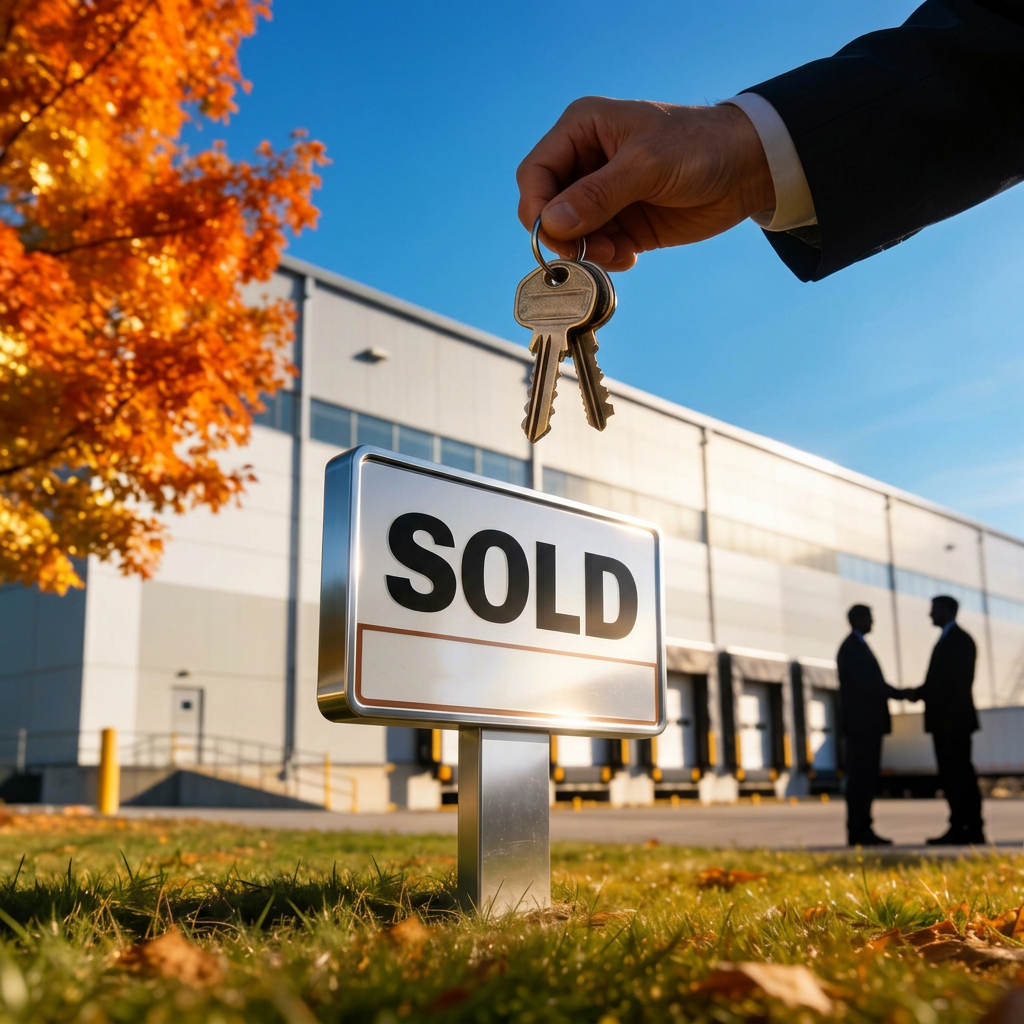
Why Choose Direct Commercial Property Cash Buyers in Michigan
Speed and certainty represent the primary advantages direct commercial property buyers in Michigan provide compared to traditional sale methods. Cash buyers can close transactions in 7 to 14 days for straightforward properties or 14 to 30 days for more complex assets, compared to 6 to 12 months for broker-marketed sales and 9 to 18 months for For Sale By Owner (FSBO) attempts. This accelerated timeline delivers immediate liquidity for property owners facing time-sensitive situations including foreclosure pressure requiring quick action to avoid default, 1031 exchange deadlines demanding replacement property identification and closing within strict IRS timeframes, partnership disputes needing immediate asset liquidation, business relocations requiring capital for new facilities or operations, estate settlements distributing inheritance proceeds among multiple beneficiaries, or investment rebalancing shifting capital from real estate to other asset classes.
The certainty cash buyers provide eliminates the most common obstacles that derail traditional commercial transactions. Financing contingencies cause approximately 30% of traditional commercial sales to collapse when buyers cannot secure loans, appraisals come in below purchase prices, lenders discover undisclosed property issues, buyers’ financial situations deteriorate between offer and closing, or credit markets tighten making commercial loans more difficult to obtain. Cash buyers eliminate financing risk entirely since they use their own capital or pre-arranged funding sources that don’t depend on third-party lender approval, property appraisals, or changing credit market conditions.
Inspection and due diligence certainty further differentiates cash buyers from traditional purchasers. While conventional buyers often renegotiate prices or cancel contracts after discovering property issues during lengthy due diligence periods, reputable cash buyers make offers based on realistic property assessments accounting for visible conditions and likely issues. Cash buyers expect to find deferred maintenance, building system problems, and code compliance issues, building these factors into their initial offers rather than using them as renegotiation leverage after signing contracts. This approach provides sellers with certainty that accepted offers will proceed to closing without last-minute price reductions or deal cancellations.
Commission elimination represents significant financial savings for property owners working with direct commercial property buyers in Michigan. Traditional commercial sales involve 6% to 10% commission fees split between listing brokers and buyer’s brokers, costing $60,000 to $200,000 on million-dollar transactions. Companies that buy commercial real estate in Michigan don’t require broker representation, allowing property owners to negotiate directly with decision-makers who have authority to make offers and close deals. The commission savings alone often offset the difference between cash offers at 75% to 85% of market value and potential retail prices at 100% of market value after deducting commissions.
As-is purchase capabilities eliminate repair costs and preparation expenses that traditional sales require. Cash buyers purchase properties in any condition including those needing major capital improvements like roof replacement, HVAC system overhauls, parking lot resurfacing, and facade renovations, properties with code violations or deferred maintenance spanning years or decades, buildings with environmental concerns requiring remediation, fire-damaged or water-damaged structures requiring extensive restoration, and functionally obsolete buildings no longer suitable for current market demands. Property owners avoid spending tens or hundreds of thousands on repairs, updates, or cosmetic improvements before selling, preserving capital for other uses while transferring property condition risk to buyers equipped to handle renovations efficiently.

How Commercial Real Estate Cash Buyers Work
The business model commercial property cash buyers employ centers on purchasing properties below retail market value, adding value through various strategies, and either holding for long-term income and appreciation or reselling at market prices after improvements. Companies that buy commercial real estate in Michigan make money through multiple approaches including purchasing distressed properties at 70% to 80% of market value, making strategic renovations, and reselling to owner-users or traditional investors at full market value, acquiring underperforming properties with tenant issues or poor management, improving operations and occupancy, and selling stabilized assets to institutional investors, buying properties in emerging markets before gentrification or development drive values higher, and holding quality properties long-term for rental income and natural appreciation.
These profit strategies enable cash buyers to pay 70% to 90% of current market value while still achieving acceptable returns on invested capital. The exact offer percentage depends on property condition with well-maintained turnkey assets receiving offers at 85% to 90% of value, location desirability with prime submarkets commanding premium pricing, income production from quality tenants providing stable cash flow, market strength and liquidity affecting resale timelines and buyer pools, and required capital improvements with extensive renovation needs reducing offers to 70% to 75% of market value.
Cash buyers determine offer prices through professional evaluation processes including comparable sales analysis reviewing recent transactions of similar properties in the same submarket, income approach calculations using current or projected Net Operating Income divided by market cap rates, cost approach analysis for renovation properties calculating land value plus improvement costs, market condition assessment considering supply, demand, and economic trends, and property-specific factors evaluating unique characteristics, opportunities, and risks. This comprehensive analysis produces offers reflecting realistic market values adjusted for property conditions and buyer profit requirements.
Funding sources for commercial property cash buyers vary by company size and structure. National companies and private equity firms typically use pooled investor capital from accredited investors seeking commercial real estate returns, institutional funds from pension funds, endowments, and insurance companies, and credit lines from commercial banks providing acquisition financing. Regional and local cash buyers often utilize personal capital accumulated from previous real estate investments or business ventures, hard money lenders charging 8% to 12% interest for short-term acquisition financing, and private money from individual investors or family offices. Understanding buyer funding sources helps sellers assess financial capability and closing certainty.

Benefits of Selling to Companies That Buy Commercial Property
Flexibility and accommodation represent significant but often overlooked benefits of working with commercial property cash buyers. Direct buyers can structure transactions to meet seller-specific needs in ways traditional buyers cannot or will not accommodate. Common flexible arrangements include leaseback agreements allowing sellers to remain in properties as tenants for transition periods ranging from 30 days to 12 months after closing, delayed closing schedules up to 60 or 90 days when sellers need extended time for business relocation or 1031 exchange coordination, partial seller financing for portions of purchase prices when buyers want to reduce cash requirements, assumption of below-market tenant leases rather than requiring vacant delivery, and early access for buyer renovations before closing when sellers agree to provide construction access.
This flexibility proves particularly valuable for business owners who own the commercial buildings they operate from, needing time to relocate operations, family estates settling deceased member properties while managing complex inheritance situations requiring extended timelines, developers or investors needing bridge periods between selling existing properties and closing on new acquisitions, and property owners coordinating multiple asset sales as part of larger portfolio restructuring or retirement planning.
Simplified processes and reduced responsibilities appeal to property owners who want to minimize time commitments and transaction complexity. When you work with direct commercial property buyers in Michigan, you avoid extensive property marketing and showing coordination requiring weeks or months of effort, lengthy negotiations with multiple potential buyers making lowball offers, managing invasive buyer due diligence with document requests, inspection coordination, and tenant disruption, addressing repair demands or price renegotiations after buyer inspections, and coordinating closing logistics involving multiple attorneys, lenders, title companies, and service providers. Cash buyers handle transaction management professionally, requiring minimal seller involvement beyond providing basic property information, allowing property access for brief inspections, and signing closing documents.
Privacy and discretion matter for sellers who prefer confidential transactions. Direct commercial property buyers in Michigan conduct private negotiations without public marketing that alerts competitors about potential business challenges or strategic changes, tenants about potential ownership transitions causing uncertainty, employees about possible business sales or relocations, or lenders about financial pressures potentially affecting loan covenants. Discrete sales prove especially important for property owners dealing with partnership disputes, financial distress, divorce proceedings, or strategic business pivots requiring confidentiality until transactions complete.

Types of Commercial Properties We Buy for Cash in Michigan
Office buildings throughout Michigan represent a significant portion of properties direct commercial property buyers in Michigan acquire. We purchase single-story suburban office buildings ranging from 2,000 to 20,000 square feet, multi-story downtown office towers in Detroit, Grand Rapids, and Ann Arbor, medical office buildings near hospital systems and healthcare corridors, creative office spaces in converted industrial or residential buildings, and corporate headquarters or campus facilities for larger organizations. Office properties with tenant occupancy, vacancy, below-market leases, or deferred maintenance all qualify for cash purchase consideration.
Metro Detroit office markets including downtown Detroit’s central business district, Midtown near Wayne State University and hospital systems, Southfield’s office corridor along Northwestern Highway, Troy and the I-75 corridor in Oakland County, and Dearborn near Ford Motor Company headquarters present diverse opportunities. West Michigan office properties in Grand Rapids’ downtown and suburban markets, Ann Arbor’s research and technology corridor, and Lansing’s government and education sectors also attract cash buyer interest throughout Michigan.
Retail properties including neighborhood shopping centers anchored by grocery stores or pharmacies, strip malls with multiple small tenant spaces, standalone retail buildings occupied by single tenants, power centers with big-box retailers, and downtown retail spaces in urban cores all qualify for cash purchases. Retail properties face particular challenges in 2026 with evolving consumer behaviors, e-commerce competition, and changing tenant mix requirements. Cash buyers purchase struggling retail properties with high vacancy, successful centers with strong tenant rosters, and redevelopment opportunities for adaptive reuse or repositioning.
Industrial and warehouse facilities throughout Michigan’s manufacturing belt attract significant cash buyer interest driven by strong industrial demand, e-commerce distribution needs, and manufacturing reshoring trends. Properties we buy include manufacturing plants with heavy industrial capabilities and specialized equipment, distribution warehouses with modern clear heights and dock doors, light industrial and flex spaces suitable for multiple users, cold storage and specialized logistics facilities, and older industrial buildings requiring renovation or conversion. Michigan’s automotive supply chain concentration, proximity to Canadian markets, and extensive highway infrastructure support robust industrial property values even for older facilities needing improvements.
Multifamily apartment buildings with five or more units qualify as commercial properties that direct buyers purchase regularly. Properties we buy include garden-style apartment complexes in suburban locations, urban mid-rise and high-rise apartment buildings, student housing near major universities like University of Michigan, Michigan State, and Western Michigan University, senior housing and assisted living facilities, and value-add properties requiring renovation, improved management, or repositioning. Multifamily properties provide stable income streams and strong Michigan market fundamentals supporting cash buyer acquisitions.
Mixed-use developments combining residential units with ground-floor retail or office space represent growing opportunities in Michigan’s urban markets. Detroit’s downtown and Midtown, Grand Rapids’ urban neighborhoods, Ann Arbor’s downtown district, and Lansing’s redevelopment areas all feature mixed-use properties that direct buyers purchase. These properties present management complexity and diverse tenant bases requiring specialized expertise that cash buyers possess.
Special-use properties including hotels and motels, restaurants with existing equipment and infrastructure, gas stations and convenience stores, self-storage facilities, car washes and automotive properties, medical facilities including surgery centers and dialysis clinics, entertainment venues and event spaces, and churches or institutional buildings requiring repurposing all attract direct buyer interest. Special-use properties often face limited buyer pools in traditional markets, making cash buyers valuable alternatives for property owners needing to sell.

What to Expect When Working With Direct Commercial Buyers
Initial contact and property information submission begins your relationship with commercial property cash buyers. You provide basic details including property address and location specifics, property type and approximate square footage, brief description of current condition, occupancy status and tenant information if applicable, your timeline or urgency for selling, and contact information for follow-up discussions. This initial inquiry requires no formal documentation, professional appraisals, or extensive preparation, taking 5 to 10 minutes to complete online forms or phone calls.
Reputable cash buyers respond within 24 to 48 hours expressing preliminary interest, asking clarifying questions about property details or your situation, and often scheduling brief property walkthrough inspections. Unlike traditional buyers who conduct extensive multi-day inspections with multiple contractors and consultants, cash buyer property visits typically last 30 to 60 minutes, focus on verifying property characteristics and assessing major systems like roof, HVAC, and structural elements, and maintain discretion with minimal disruption to tenants or operations.
Cash offer presentation occurs within 24 to 72 hours after property walkthrough, with serious buyers providing written offers including specific purchase price without negotiation ranges or “up to” language, proposed closing timeline with flexibility for your schedule, explanation of how the offer was calculated with supporting market data, list of any contingencies though most cash offers are non-contingent, and proof of funds documentation demonstrating financial capability. Professional cash buyers present offers in clear, straightforward language avoiding confusing legal jargon or ambiguous terms that create uncertainty.
Evaluating cash offers requires looking beyond purchase price to assess overall deal quality. Important evaluation factors include total net proceeds after paying off existing mortgages and standard closing costs, closing timeline and whether it meets your requirements, buyer reputation and track record with verifiable references, contingencies or conditions that could delay or prevent closing, flexibility for leaseback or other special arrangements you need, and overall certainty based on buyer financial strength and professional presentation.
Due diligence and contract execution follow offer acceptance, with buyers conducting title work to verify ownership and identify any liens or encumbrances requiring resolution, property condition assessments usually less invasive than traditional buyer inspections, environmental Phase I assessments for appropriate property types, lease file review for occupied properties, and financial analysis of operating statements and rent rolls. During this period, typically 7 to 14 days, buyers occasionally request minor clarifications or documentation but rarely attempt price renegotiations since their offers account for expected property conditions.
Closing coordination involves scheduling with title company and attorneys, final walkthrough 24 to 48 hours before closing, signing closing documents at title company or attorney offices, and funds transfer via wire to your bank account on closing day. Professional cash buyers make closing processes efficient and stress-free, handling logistics and coordination while keeping you informed throughout.
Get A Listing Offer
Compare Cash Buyers vs Traditional Sale Methods in Michigan
Understanding how direct commercial property buyers in Michigan compare to traditional sale methods helps you choose the approach best suited to your priorities, property characteristics, and timeline requirements. Each method offers distinct advantages and trade-offs affecting your net proceeds, time investment, and transaction certainty.
Cash buyer purchases provide the fastest timelines closing in 7 to 14 days for urgent situations or 14 to 30 days for standard transactions, highest certainty with no financing contingencies or deal collapse risks, lowest seller effort requiring minimal time and involvement, as-is purchases eliminating repair costs and preparations, zero broker commissions preserving more proceeds, and privacy with discrete transactions. Trade-offs include purchase prices at 70% to 90% of retail market value, limited negotiation leverage once offers are made, and reduced ability to create competitive bidding situations.
Traditional broker-marketed sales offer potential for highest sale prices through competitive marketing, professional transaction management and negotiation expertise, broad market exposure to extensive buyer networks, broker guidance on pricing and deal structure, and ability to create bidding competition among multiple buyers. Disadvantages include 6% to 10% broker commissions reducing net proceeds, 6 to 12 month sale timelines from listing to closing, property preparation and repair requirements before marketing, financing contingencies causing 30% of deals to fail, and extensive showing requirements and transaction complexity.
FSBO commercial sales eliminate broker commissions preserving maximum proceeds, provide complete seller control over all transaction aspects, allow direct seller-buyer communication and negotiation, and accommodate confidential sales to known parties. Challenges include 9 to 18 month sale timelines typically longer than broker sales, limited market exposure reaching smaller buyer pools, 40 to 80 hours of seller time commitment, legal complexity requiring attorney guidance, and higher failure rates with many FSBO attempts eventually hiring brokers.
Ready to work with trusted commercial property cash buyers in Michigan? I Sell Commercial Assets purchases office buildings, retail centers, industrial warehouses, multifamily properties, and all commercial asset types throughout Detroit, Grand Rapids, Ann Arbor, Lansing, Flint, and every Michigan market. As one of the leading companies that buy commercial real estate in Michigan, we provide fair cash offers within 72 hours, close on your timeline from 7 to 60 days, purchase properties in any condition, charge zero commissions or fees, and handle all transaction details professionally. Contact us today to receive your free, no-obligation cash offer and experience the speed, simplicity, and certainty that direct commercial property buyers provide.